A hall built for the people of Clewer.
Clewer Parish Hall has stood in Parsonage Lane since 1893, but its story begins with a much wider Victorian movement to bring education and learning opportunities to ordinary people.
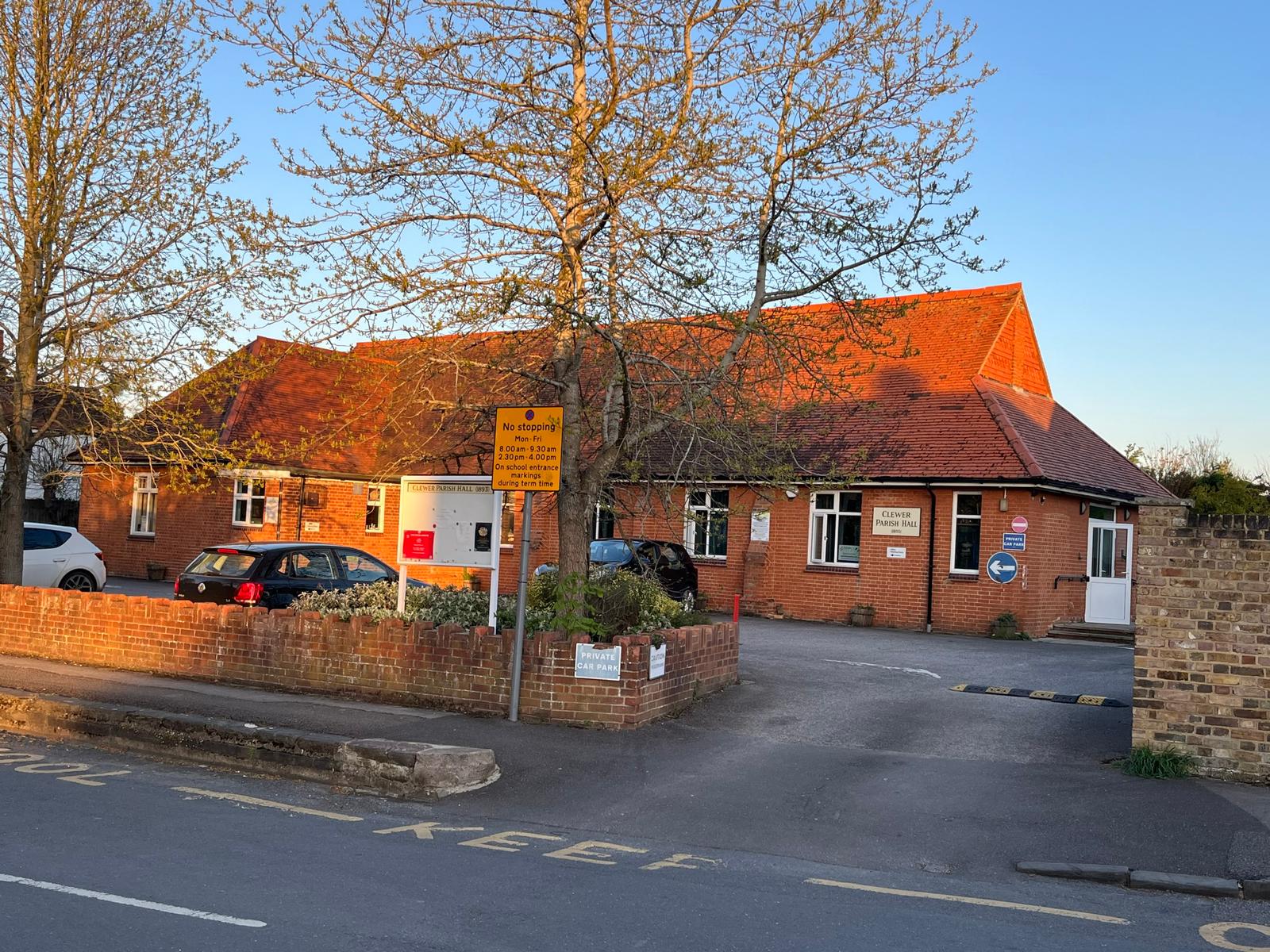
Education, opportunity and a community of its own.
During the nineteenth century there was growing interest in making education, culture and learning available beyond Britain's wealthiest families.
The Literary and Scientific Institutions Act of 1854 encouraged land to be given for halls, reading rooms, lectures, exhibitions and other educational activities. It was under this legislation that the story of Clewer Parish Hall began.

The land is given to Clewer.
The Gooch family had lived at Clewer Park since Sir Daniel Gooch bought the estate in 1859.
In 1890 his son, Sir Henry Daniel Gooch, together with Daniel Fulthorpe Gooch, gave a parcel of land in Parsonage Lane on which a hall for the people of Clewer could be built.
Trustees were appointed and money was raised through donations, public subscription and a successful bazaar at the Albert Institute in Sheet Street.
The hall through the generations.
From Victorian reading room to wartime headquarters, youth centre and today's community venue.
Clewer Parish Hall opens
Funds were raised quickly and the new hall opened in 1893. A management committee was established to run it for the people of Clewer, with learning and educational activities at the heart of its purpose.
Who actually owned the hall?
The division of Clewer into two civil parishes led to disagreement over control of the hall. At a packed public meeting in 1899 the original Trust Deed was read aloud, confirming that the hall belonged to its charitable trust rather than the Parish Council.
The First World War
The First World War inevitably changed community life and affected the way the hall was used, as it did so many organisations across the country.
Wartime headquarters
During the Second World War the hall became a headquarters for the ARP and other civil defence organisations. Its windows were blacked out and crossed with anti-blast tape, while sandbags were piled around the building.
Music, Scouts and community life
Windsor & Eton Operatic Society used the hall and its stage for rehearsals, while the local Scout troop had a hut in the grounds and also met in the hall.
A new chapter
Following many years of use by the Young Adventurers and Palladin Boys Club, the trustees began looking for a new way to secure the future of the building when the club closed in 1997.
Berkshire Youth arrives
Berkshire Association of Clubs for Young People, now Berkshire Youth, took a 21-year lease and helped develop a thriving programme of youth clubs, educational activities and community use.
Pandemic and change
The COVID-19 pandemic forced the hall to close for long periods. Berkshire Youth's lease also came to an end in November 2020, leaving another important decision about the hall's future.
A simpler future
The trustees and management committee agreed a simpler structure designed to keep costs manageable, maintain the building and ensure the hall could continue serving the community.
The night the special effects became a little too realistic.
When The Old Uptonians staged 1066 and All That, an enthusiastic effects team used a small explosive device above the stage. It went off exactly as intended — but also set fire to a roof beam. A well-aimed bucket of water quickly extinguished the flames, along with several members of the cast and audience. Fortunately, little damage was done.
It was never actually a church hall.
Over time, St Andrew's Church became one of the principal users of the building and many local people understandably came to regard it as the church hall.
When the original 1890 Trust Deed was later examined, however, it confirmed the hall's original purpose: it had been established independently for the benefit of the people of Clewer.
More than 130 years later, the hall is still here for essentially the same reason: to be used and enjoyed by the local community.

The story is still being written.
Today the trustees and management committee continue to look after the hall, maintain the building and make it available for classes, educational activities, meetings, celebrations and community events.
Every booking helps keep this historic community building active and available for future generations.
Book the Hall